

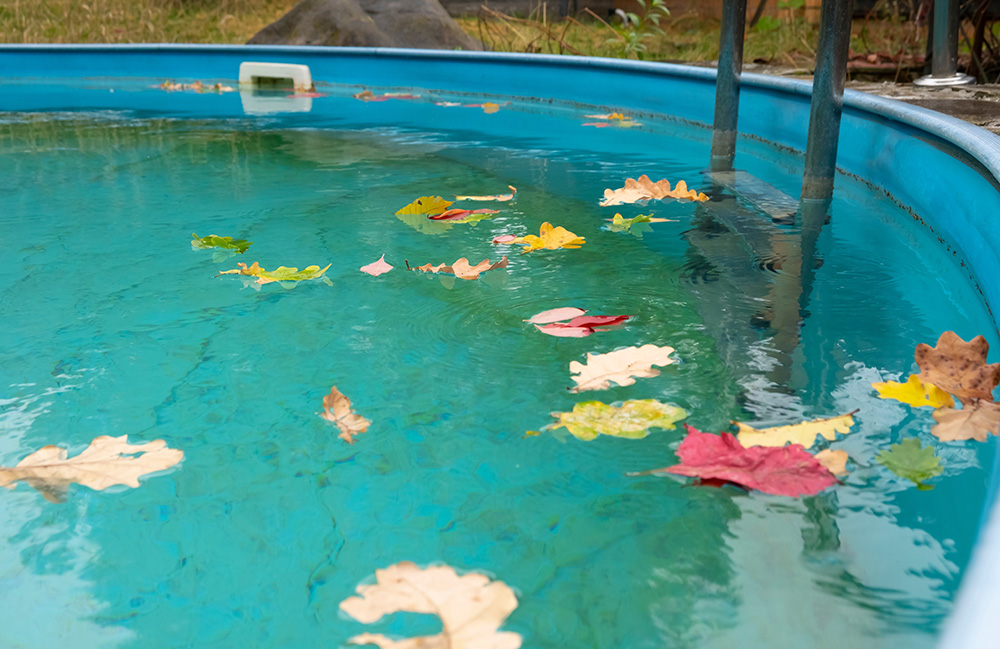
Storms and flooding have several effects on swimming pools, including the following:
Step 1. The first step is to clean the pool of dirt and debris. Remove any large debris such as branches etc, empty both the skimmer and pump basket. In the case of the water being very dirty such as when soil has been flushed into the pool, a heavy duty floc may be required. Follow the label instructions of the floc you are using and then vacuum the pool to waste. See below for important information relating to keeping the pH high for flocs to work properly.
Step 2.Test and re-balance the pool water including the addition of salt and minerals where required.
Step 3.Shock dose the pool.
Step 4.Add the required dose of phosphate remover to remove unwanted phosphates.
Step 5.In case of cloudy water use a clarifier.
Step 6.Add a algaecide.
This might be an appropriate time for a refresher course on flocculants and how they work.
The terms “flocculants” and “coagulants” are synonymous with each other; however the process of clearing cloudy/dirty pools is in fact a two-stage process involving both coagulation and flocculation.
Cloudiness of water is caused by fine particles suspended in the water. These particles are typically smaller than two microns and will normally pass through the filter system. They are of low density and will therefore be suspended in the water. Most particles are negatively charged and repel each other.
In order to remove these particles it is first necessary to add a flocculent which will coagulate the fine particles into larger “flocs” by neutralising the negative charge, allowing the particles to come together and form a floc.
Some flocs will be “light flocs” which will tend to remain suspended in the water or even rise to the surface of the pool and are then caught on the filter bed. Algae and organic matter may form lighter flocs.
Soil, dust and clay, being denser will form heavier flocs which will sink and form sedimentation on the floor of the pool and this should be then vacuumed to waste. The type of flocculent used will also dictate if a light or heavy floc is formed. Aluminium based flocs such as poly aluminium chloride (PAC) or Alum will form a heavy floc which settles on the bottom while some Cationic Electrolytes and natural flocs will form light flocs and tend to be caught by the filter.
Some important points to note when flocking pools are:
One last tip – after vacuuming and rebalancing the pool water place a clarifier in the skimmer basket to really polish the water and leave it crystal clear.
No matter how bad you think the water might be after a storm, be aware that flood water will have made the ground conditions around the foundations of the pool very wet. Pools should not be drained until ground conditions have dried to at least the depth of the pool as the entire shell of the pool (fibreglass or concrete) can “pop” out of its original position with the change in hydrostatic pressures.
Except for the most severely affected, almost all swimming pools and spas can be brought back to life after floods, storms and fire without the need to drain the water. In that instance it should always be left to a professional – a pool owner should never drain their own pool.